Showing posts with label
BEST PLC SCADA Training Institute in Chennai | Best Training Institute In Chennai.
Show all posts
Showing posts with label
BEST PLC SCADA Training Institute in Chennai | Best Training Institute In Chennai.
Show all posts
Rapid power transmission and distribution systems from power plants to customers in residential or office safe is a challenge today's power generation industry. Electric utilities parties must be able to meet the electricity needs of the community well, minimizing disruptions and power cuts as much as possible. Electricity utility must collect and distribute electricity from the various sources of electricity generation, many of them intermittent, and distribute to customer by utilizing automated monitoring and control of SCADA.
Substation power plants have a complex system and have varying amounts of control and operator interface points. Substation power plants will be controlled and monitored in real time by a Programmable Logic Controller (PLC) and by special devices such as circuit breakers and power monitor. Data from the PLC and the device is then transmitted to a PC-based SCADA node in the substation.

SCADA implementation in the electrical distribution system is greatly assisting the authorities of electricity in various ways such as:
SCADA systems are able to make the process safer, faster and completely automated start of collecting data to provide automatic control that greatly benefits utilities. One application is when there are problems in the field Alarm they detect problems in the system, and analysis of this issue allows adjustments and corrections, often prevent the outage automatically. When there are problems e.g. outage caused by an unexpected event such as a hurricane, SCADA a sophisticated system of data collection capability helps field workers to quickly identify the exact location of outages without having to wait for customer calls.
As automatic control systems, SCADA able to change the system work a lot of utilities that still rely on manual labor to perform tasks automatically power distribution. This process is able to cut labor costs, making the process safer and more comfortable and minimize distractions. Modern SCADA system also features built-in redundancy and backup systems to provide sufficient reliability, and can respond more quickly and consistently than manual process.
Excellence SCADA system is able to significantly increase the speed of recovery in the event of power outage. These problems occur when the SCADA-enabled switches and closers line so it can help isolate the location in case of a blackout by means of open automatic switch adjacent to the power switch quickly to other parts without the need for line workers to visit the site to perform a visual inspection long.
Modern SCADA systems that provide multiple benefits in the security system and keeping the level of workers due to the substation and at DER connection point, the data should be collected and made available to the SCADA system so that it can detect problems that occur more quickly. DER automates monitoring in real-time with the SCADA system allows the operator to make more information more rapid adjustments, and to uncover trends and issues before a problem occurs.
SCADA system improvements make it easier to do on a regular basis. For example, if a power monitoring device has a protocol and some types of hardware then with the SCADA system in more easily configured and installed. In addition some offer a DNP3 SCADA software package is required and IEC-60870-5-104 protocol so as to facilitate early detection if a problem occurs automatically.
SCADA is able to analyze and identify quickly and automatically condition of excess capacity and so the power can be transferred from the area approaching overload. The control system can also analyze trends and historical data also helps maintain the desired power factor, voltage level and
other parameters of the distribution system at the desired level.
SCADA systems are designed to simplify power distribution applications with the help of PC-based software. Data collected from the electrical distribution system, with most of the data that comes in the substation to be processed in the SCADA control system so that the process control can be run automatically, quickly and accurately.
Ultrasonic Level Sensors uses the similar concept of the well-known sonar systems. We are all familiar with the sonar technology as a time-tested device to monitor the liquid deeps and bottoms like sea or underwater objects. Ultrasonic Level Sensors better for particular tasks like measuring liquid in the tank. Ultrasonic Level Sensors optimized for uses in the air with similar function as liquid level indicators.
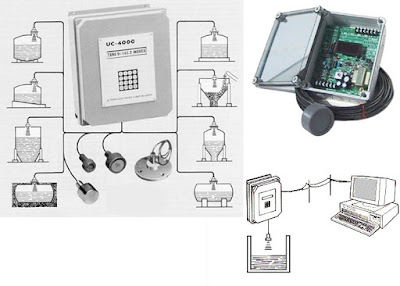
In principle, Ultrasonic Level Sensors comprise of two important components namely: control box and transducer. They both work together and inseparable. Transducer is also called as sensor. In the site, transducer is placed at the top of the tanks pointing downward to the liquid surface. The signal outputted by the transducer will deploy through the air down to the liquid surface. The signal sent doesn’t penetrate below the surface, but it will reflected back to the transducer. This echo then translated into data that indicating the deep level of the liquid in the tank.
Moreover, to keep the data accurate, there particular conditions to be fulfilled such as amount of gravity and viscosity. In addition, see more advantages of this sensor as below:
Ultrasonic Level Sensors is easy to be set and forget for minimize maintenance cost, as there are no need of regular cleaning, sealing or replacing elements. This sensor is also no need calibration for smart set up system. In addition user can get other benefit as below:
- Will last up to 20 more years with proper installation
- Fumes inside tank and vapor condensation do not influence transducers. Many claim that fume will absorb the ultrasonic signal, but that’s not true at all. The only matter is depending on the product quality and method of installation. Moreover, transducers are firmly and hermetically sealed. Then they save to be placed in the liquid and immersing in liquid not causes damage.
- Transducers are available in various shapes and material housing, so they are very adaptable to various environments and applications. The housings could be made from stainless steel, explosion-proof materials, and heat-resistant materials, PVC, Teflon and many more.
- Using the right control box, users can do multiplexing. They can monitor different tanks through one control box.
As part of control system, beside all advantages of ultrasonic level sensor as mention above, user have to know disadvantages as below:
- Not applicable for liquids that produces thick foam
- Requires clear liquid surface
To meet a wide array of different level measuring of liquid in the tank, Automated Sonix provides numbers of Level Sensors ranging from the models that built-in with Digital Indication and products with no digital Indication. One example is the Model UC-4000. This model designed to monitor up to 9 tanks regardless of the size. It offers smart features like automatic scans actions, automatic display level, volume or optional weight of each tank in sequent. The Model UC-4000 designed to be used for any liquids. To monitor up to 9 tanks, it only need one control box and everything will function properly. In practice, it will automatically monitor and all tanks.
In the lower class are the Model UL 1000 and Model UL-100, which both designed to monitor 1 tank. They keep the similar powerful feature for various applications. Finding it very great, all of the Automated Sonix’s Ultrasonic Level Sensors supported with optional RS232C computer output giving you chance for further analysis.
Among available Ultrasonic Level Sensors in the market, Automated Sonix is the world’s leading company that provides a wide array of Level Sensors. Here is where you can go for the best non-contact liquid Level Sensors and tank Level Controls. You can use Ultrasonic Level Sensors optimized for uses in the air with similar function as liquid level indicators.
Electrical PLC Systems have the ability to maintain the performance of the system with known parameters. Simply put, the system has the ability to monitor and control operations to take advantage of the basic pillars of the electrical control systems. These include: manufacturing systems, recycling pumps, air compressors, , and benefit analysis and measurement, cooling stations and control panel in the engine.
Electrical control systems have double benefit by saving money through behavioral modeling and predictive control as well as reducing production applies which include wiring changes between devices and relay contacts easier. But let's take a closer look at Electrical PLC Systems or processes that can alter and change the way you do business systems.

Electrical PLC Systems and manufacture of automation will not exist without the need for PLC programming. This is a digital computer used in mechanical and electrical operations such devices on the factory line. Previously thousands of individual relays and timing of automation systems used. In most cases, this is replaced by the PLC allows all relays and timers in a factory.
Before using Electrical PLC Systems, user must deeply understand working systems of several supporting device such as: Sensors, Actuators, Discrete inputs, Discrete outputs, Analog inputs., Analog output, CPUs. All supportig device will make Electrical PLC Sysems run well automatically.
Programmable Logic Controller (PLC) will upgrade and change forever stay current with today's technology. Every day we hear new and improved this use Electrical PLC Systems in automotive plant assembly lines. In others field, Electrical PLC Systems is also applied on, damping operations in a building HVAC system facility’s fire alarm system, etc. PLCs interface and control various operations is also benefically for controlling elevator recall functions.
Easy and simple wiring is essential to the Electrical PLC Systems. The simple and easier hard-wired will be a great advantage for the PLC. Using PLCs, user have become easier to use and much less expensive during past decades. PLC application is user-friendly. It can guide you to make changes much more quickly than with traditional control methods and equipped with integrated diagnostics. This make you to immediately document application changes.
Using Electrical PLC Systems will make wiring systems between devices and relay contacts easier. it’s make less intensive than before. All PLC programming can be done via microprocessor systems that contain the system memory using proprietary free software. This program will set the inputs and makes decisions based on instructions held in its program memory to do several instruction suc as performs relay, counting, timing, data comparison, and sequential operations. To get PLC Software programming, the PLC programmer to surf the Internet for the latest revisions and download new programs.
Electrical PLC Systems change the way companies do business with critical automation from PLC programming, industrial automation systems and risk assessment. Manufacturing process control and information systems that maintain effectively is making business to become not only more efficient, but also profitable.
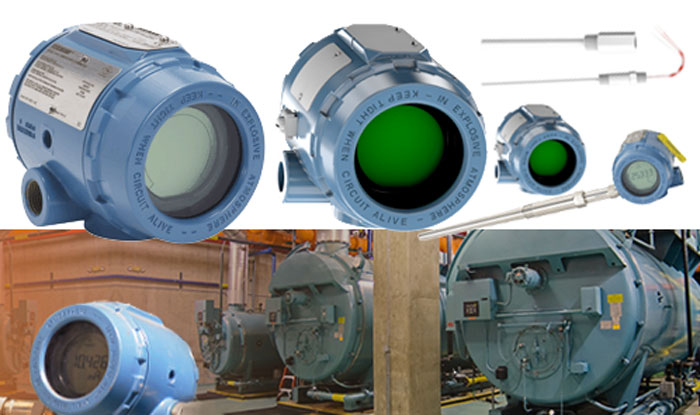
Rosemount Smart Temperature Transmitter has main function to reach Production and Quality Targets, and reduce process variability with the industry’s most accurate temperature transmitter and RTD sensor combination. This can be done by eliminate downtime due to temperature sensor failure with Advanced Diagnostics. This transmitter has Industry-leading 5-year stability, which reduces maintenance costs to provides industry-leading accuracy, stability, and reliability with the most advanced diagnostics in a dual-compartment housing.
Rosemount Smart Temperature Transmitter composed by Single-sensor and dual-sensor input capability in one transmitter to enhance EMI rejection and filtering results in unmatched stability in process measurement. This composition has Safety Certified third party validation metrics per IEC 61508 for Safety Instrumented Systems (SIS).
Rosemount Smart Temperature Transmitter has Long-term stability: 5 years, completed by Limited Warranty: 5 years and Advanced Diagnostics with SIL 2/3 Safety Certification. To reduce process variability, this transmitter has maximize system accuracy with Callendar-Van Dusen (CVD) Sensor Matching Digital Accuracy: ±0.08°C (±0.14°F) for Pt100 RTD. It required frequent calibrations, that allows you to lower total cost of ownership by extending calibration intervals and reducing trips to the field.
Rosemount Smart Temperature Transmitter protected by Dual-Compartment Housing Provides Superior Environmental Protection to maintain standard condition of Humidity, high RFI, and other environmental factors can impact instrument reliability. To prevent failure of the electronics and minimizing costly process downtime, Rosemount Smart Temperature Transmitter having Aluminum housing protects against high electrical noise, Dual-compartments reduce exposure of electronics to surges and Transition pins between compartments filter out interference.
Rosemount Smart Temperature Transmitter has dual-compartment housing provides the highest reliability in harsh environments and integral LCD meter with large, easy-to-read display. To eliminate sensor interchangeability error, this transmitter supported by Hot Backup® and Sensor Drift Alert and Transmitter-Sensor Matching features improve measurement reliability over time.
Rosemount Smart Temperature Transmitter acts like a Safeguard Your People that gives environment facility Rely upon Hot Backup™ Capability with a secondary sensor, that seamlessly takes over if your primary sensor fails. This transmitter can Monitor, Detect and Record Abnormal Conditions from comprehensive diagnostics with immediate Diagnostic Log that automatically generates records.
Rosemount Smart Temperature Transmitter can be applied in Chemical Company to reduce Uncertainty in Critical Ethylene Flow Measurement and Glass Furnace Temperature industries to reduce maintenance cost. This transmitter is fully Assembled Rosemount Temperature Solutions and can save installation time and cost when ordering a transmitter with a Rosemount Sensor and Thermowell.
This transmitter completed by Dual sensor capability with Hot Backup and Sensor Drift Alert ensures measurement integrity and Spot Trouble Early to Avoid Process Shutdown. By using advanced diagnostics device and Thermocouple Degradation Diagnostic properly, you have greater visibility into your temperature measurement loops and the condition of your sensor.
Rosemount Smart Temperature Transmitter configured with sensor information and Calibrated with equipment traceable to NIST standards to reduce process variability with the industry’s most accurate temperature transmitter and RTD sensor combination. Product knowledge understood well make this transmitter produce high performance and improves accuracy by 75%. For long term utilize, at least this Industry-leading 5-year stability enable reduces maintenance costs
In a control system remote terminal unit (RTU) is designed to correlate with the SCADA master station database and serves to connect the sensor to the server in the data transfer process, converting sensor signals into digital data and sends digital data to the control system. In general, a SCADA system always refers to a system that coordinates, but does not control the process in real time and it represents the predominant SCADA systems and protocols in use in the utility industry today.
SCADA communication is regulated through a protocol that works between the host and the RTU form a viable model for the RTU to intelligent electronic devices (IED) communication. If the antiquity used a proprietary protocol in accordance with its SCADA manufacturers, now there are already some established protocol standards, so no need to worry about compatibility issues of communication again.
Currently, in the industry, there several different protocols used. The most popular are as below:

SCADA protocols are designed to be very compact. Many are designed to send information only when the master station polls the RTU which is situated between the Open System Interconnection (OSI) application layer and the application program.
Many of these protocols such as DNP3 used for transmission of data from point A to point B using serial communications now contain extensions to operate over TCP / IP. Although some believe that the security of good engineering practice to avoid connecting SCADA systems to the Internet so the attack surface is reduced, many industries, such as wastewater collection and water distribution, have been using the existing cellular network infrastructure to monitor them along with internet portal for late-data the delivery and modification. Cellular data network based on thethree-layer enhanced performance architecture (EPA) model contained in the IEC 60870-5 standards is encrypted before transmission over the Internet.
Because most sensor and control relays are just simple electrical equipment, such tools can not generate or translate the communication protocol. Thus it takes RTU bridge between the sensors and the SCADA network. RTU changing sensor inputs to the relevant protocol format such as IEC 60870-5 specifies a number of frame formats and services that may be provided at different layers and sends it to the master SCADA. Enhanced Performance Architecture (EPA) reference model for efficient implementation within RTUs (RTU besides also receive commands in protocol format and gives a corresponding electrical signal to control the respective relays), meters, relays, and other Intelligent Electronic Devices (IEDs).
Due to the use of standard protocols and the fact that many network SCADA system can be accessed from the Internet, a system that is potentially vulnerable to remote cyber attacks. On the other hand, the use of standard protocols and technical security means that security fixes are applicable standard for SCADA system, assuming they receive timely treatment and update.The use of the Distributed Network Protocol version 3 (DNP3) and the IEC 60870-5-101 protocol has several advantages such as High data integrity, Flexible structure, Multiple applications, Minimized overhead and Open standard.